 View Large

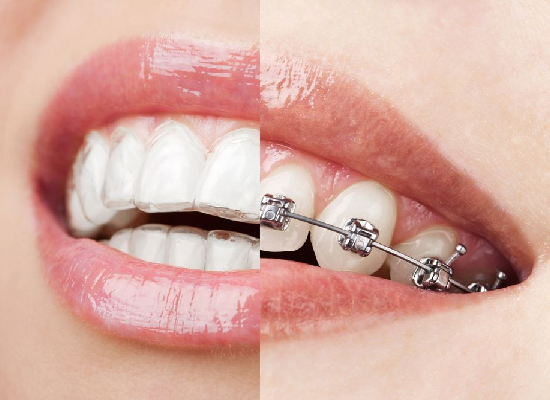
Clear Aligners / Invisible Braces
While they are intended for adults and older teenagers, invisible braces are not advised for those who still have baby teeth. Orthodontic difficulties in children and younger teenagers will require standard metal braces with brackets and wires on the front of the teeth. Still, only your orthodontist or dentist can decide if you qualify. Because the alternative treatment requires complete and strict cooperation, it was created particularly for adults. The “trays” are worn for 22 hours a day and should not be misplaced or forgotten.
Clear aligners, inner braces, and ceramic brackets are popular varieties of invisible braces. Ceramic braces work similarly to metal braces, except instead of using metal to straighten teeth, they utilise brackets and, occasionally, wires that match the colour of the tooth. The tooth-colored ceramic “blends” with your teeth, usually leaving no stains behind, making them less obvious than metal braces but not as “invisible” as clear aligners or inside braces. To make treatment practically invisible, inside braces, also known as inside invisible braces, lingual braces, or “iBraces,” and clear aligners go one step further. There are benefits and drawbacks to each option.
Length of Treatment
Your circumstances and the kind of invisible braces you wear will determine how long your treatment takes. Although they are occasionally worn longer, braces are normally used for 18 to 24 months.
Because they are composed of the strongest materials, metal braces are the best. Although stronger and more aesthetically pleasing than metal braces, ceramic braces may require longer time to complete. Effective operation of inside braces may also require additional time.
With clear aligners, treatment times vary. For instance, the average duration of an Invisalign treatment is nine to fifteen months, with each upper and lower set of aligners requiring 20 to 30 aligners. Depending on the particular alignment issue, ClearCorrect treatment durations range from 12 to 24 months. For moderate cases, this means 32 steps of therapy given in eight phases, while treatment for minor cases calls for 12 steps of treatment given in three phases.