 View Large
Bridges & Crowns
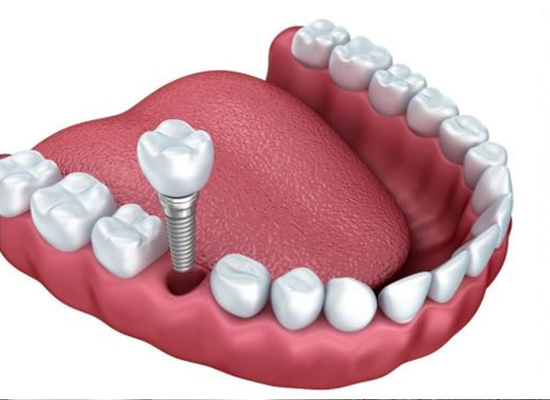
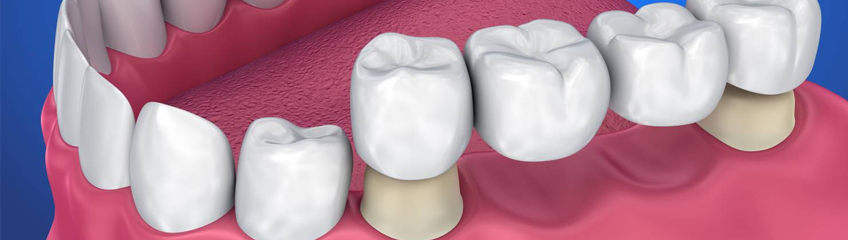
A dentist can utilise crowns and bridges as permanent prosthetics. To keep already-existing teeth together, they are affixed. Crowns are sometimes used to “cap” or envelop an implant or a damaged tooth. As the name implies, bridges are used to fill up spaces left by missing teeth. These are joined to either natural teeth or implants next to the original location.
Benefits of bridges and crowns: Bridges and crowns are used to reinforce teeth that have been broken or fractured, as well as to enhance their shape, location, and dental closure (bite). These also aid in stopping teeth from shifting as a result of spaces left by lost teeth.
How are bridges and crowns made?
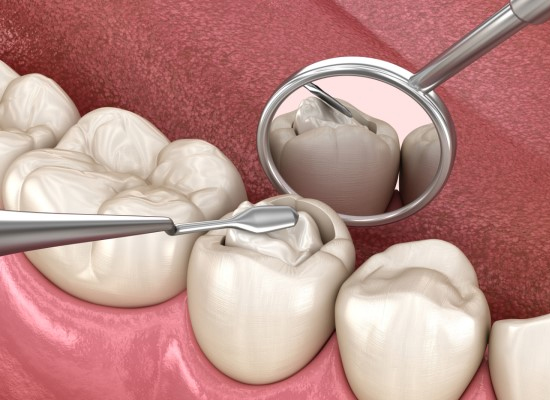
For a crown or bridge to fit correctly, a tooth or teeth must first be made smaller. Following this, in order to create an exact mould for the crown or bridge, your dentist will take impressions of your teeth. The dentist will choose porcelain if you want the crown or bridge to match the exact colour and tint of your natural teeth. The dental lab will utilise the imprint to create the crown or bridge once your dentist has specified the material to be used. You will have a temporary one in your mouth while the permanent one is being created. The permanent crown or bridge will be glued in place with the existing teeth after it is manufactured.
How do bridges work?
To fill in the space left by a missing tooth, a bridge is employed. A poor bite is eventually caused by the remaining teeth rotating or shifting from their original placements due to tooth loss. Gum disease and problems with the Temporomandibular Joint (TMJ) can also result from this discrepancy.
The original tooth’s surrounding area is where bridges are glued to. Known as abutments, these teeth serve as the bridge’s anchors and sources of support. During your visit with your dentist, you can select the material for crowns and bridges. The position, function, look, and cost of the missing teeth all play a role. A pontic, sometimes referred to as an artificial tooth, is cemented to the crown that encases the abutments. Porcelain and ceramic materials are similar in colour to your real teeth.
How do crowns work?
An damaged tooth is fully concealed, or “capped,” by a crown. Additionally, it strengthens and enhances the shape, form, and position of teeth. It is shaped and functions like a tooth when it is placed on top of an implant. Crowns are available in acrylic and other metallic alloys in addition to porcelain and ceramic that matches the colour of the natural teeth. While porcelain seems more appealing, metallic alloys are suggested for back teeth since they are stronger than porcelain.