 View Large
Wisdom Teeth Removal
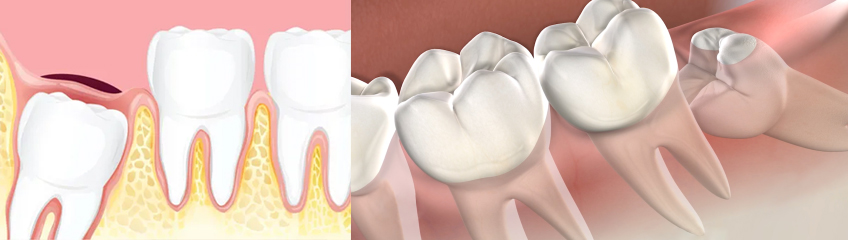
The wisdom teeth, also known as third molar teeth, are located at the back of your mouth. They usually manifest (erupt) in the late teens or early 20s. Some wisdom teeth partially erupt instead of coming through all the way, becoming caught (impacted) on neighbouring teeth or bone. This frequently results in a gum flap covering your teeth. Some become too lengthy (overerupt).
Problems with wisdom teeth
While some wisdom teeth erupt (come through the gums) without any issues, other wisdom teeth may erupt at an angle and press against the gum or the tooth next to it. We refer to this as impaction.
Wisdom teeth impaction can be excruciating and occasionally result in infection. These teeth can be challenging to brush. teeth decay and gum infections known as pericoronitis can result from food particles and germs becoming lodged between the wisdom teeth and the neighbouring tooth.
Removal of wisdom teeth
X-rays will assist in determining whether wisdom teeth could be problematic. Certain wisdom teeth are not problematic and do not require extraction.
All you might need if your wisdom teeth need to be extracted is a local anaesthetic to make the procedure painless for you. You might be offered a general anaesthetic if your wisdom teeth are severely impacted (prevented from coming through) and difficult to remove, or if there are other medical reasons. To make it more comfortable, nitrous oxide, sometimes referred to as happy gas, can occasionally be used.
The wisdom tooth extraction site might require suturing to promote healing after the tooth is extracted. When your wisdom teeth is extracted, it’s common for your gums and jaw to hurt, swell, and bleed a little for a few days.
A dry socket (also known as alveolar osteitis), which occurs when the wound where the wisdom teeth were removed doesn’t heal properly, can be a serious side effect of wisdom tooth extractions. It also smells unpleasant. Those who smoke or have trouble recuperating tend to experience this more frequently. Your oral health professional can effectively treat dry socket.
Problem wisdom teeth are best removed early
The likelihood of issues and potential harm to the neighbouring teeth increases with the amount of time you wait or delay. An expert in oral health can assist in early issue detection. A dentist can remove wisdom teeth, but they may also need to send a patient to an oral maxillofacial surgeon, who has undergone further training and education in the surgical treatment of the teeth, jaws, and face.
Teenagers are the age when wisdom teeth are easiest to extract since their roots are still developing. If you wait until later in life, when the roots are fully grown, it can be more difficult. When your bone is younger and heals and recovers more quickly, wisdom teeth removal may also be simpler.